Category: insight

  • Cybersecurity’s Redefined Objective: Operational Predictability

    Cybersecurity’s Redefined Objective: Operational Predictability

    Why mature processes — not more tools — are becoming the defining factor in financial resilience.

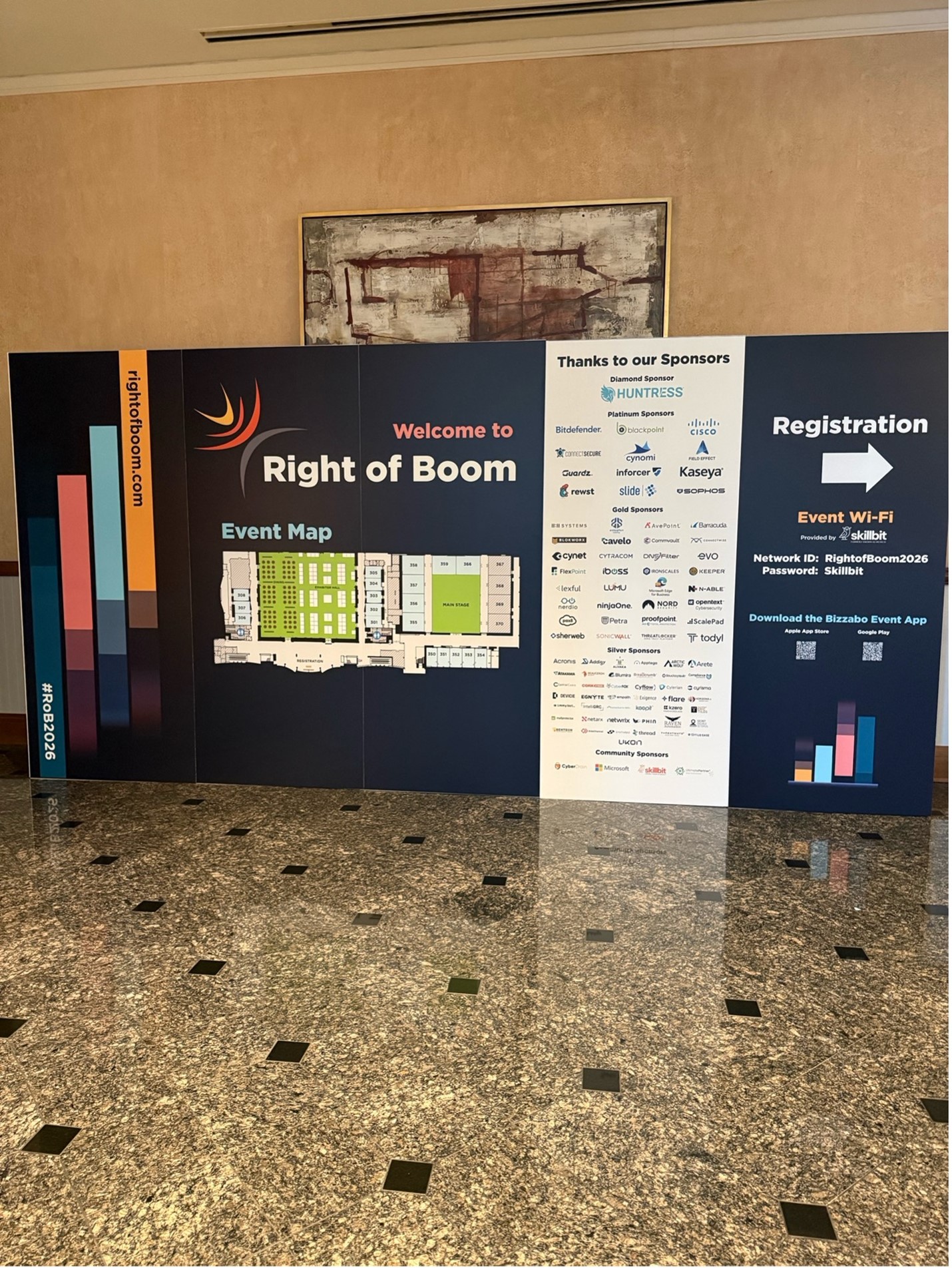
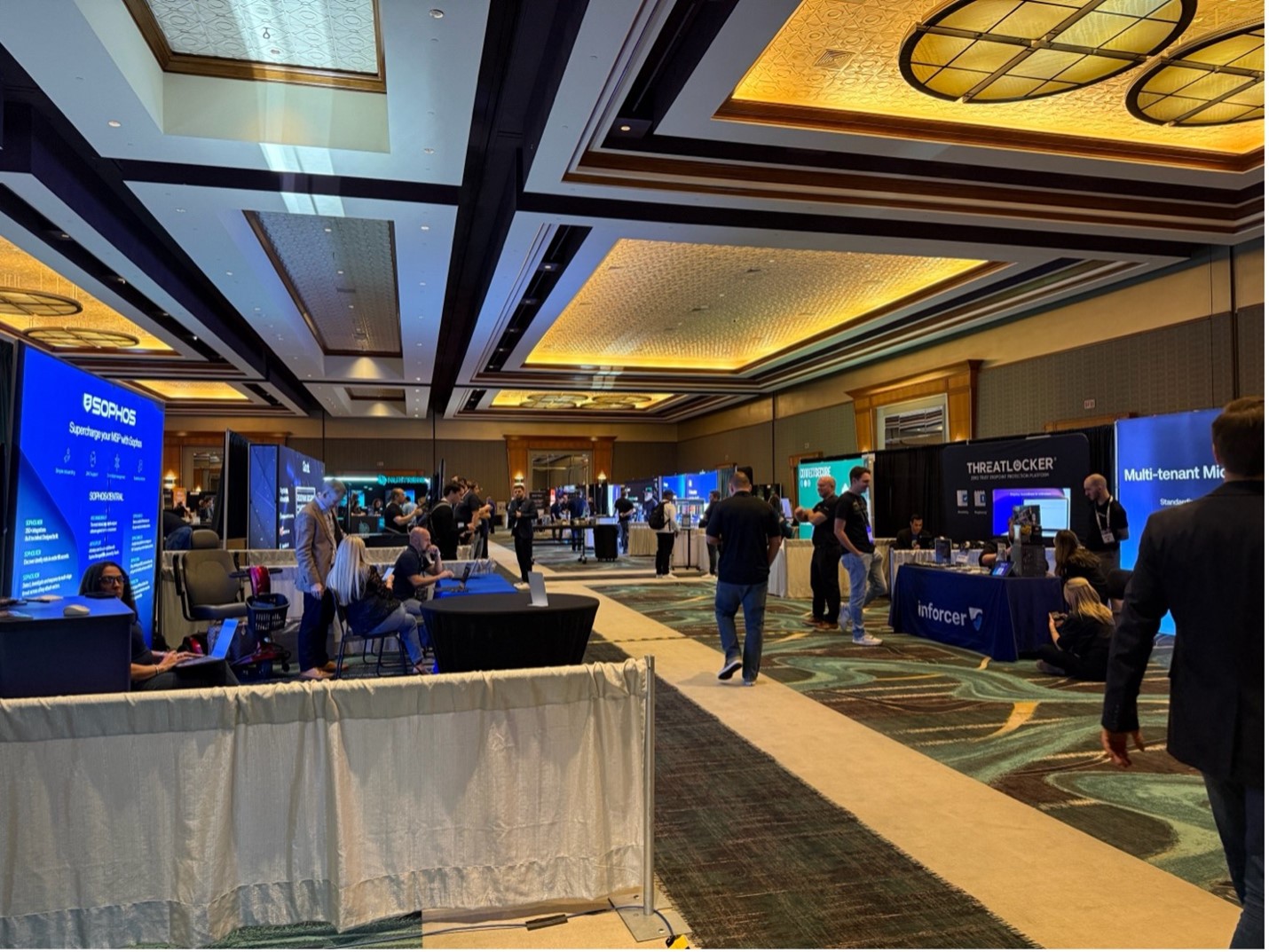
    Attending Right of Boom, one of the largest security conferences focused on managed service providers and security operators, reinforced a shift that has been building for several years: cybersecurity is no longer viewed as a technical issue delegated solely to IT. It is now recognized as a core business risk with direct operational and financial consequences.

    The consistent theme across sessions and conversations was predictability.

    Cybercrime has evolved into a structured, efficient industry. Today’s attackers are not isolated individuals experimenting with ransomware kits. They are coordinated operators who understand how organizations function and where they are most vulnerable. They intentionally exploit operational friction, weak controls, and delayed decision-making.

    For executive leadership, particularly CFOs, this reframes the cybersecurity conversation. The objective is not the unrealistic pursuit of preventing every incident. It is limiting operational and financial disruption when an incident inevitably occurs.

    Downtime, legal exposure, regulatory scrutiny, reputational damage, and insurance implications were repeatedly cited as primary concerns. These are not abstract IT problems. They are balance sheet issues.

    One insight that stood out came from Huntress CEO Kyle Hanslovan, who described how attackers increasingly rely on “predictable mental distress.” When organizations lack documented processes, defined ownership, and rehearsed response plans, isolated security events escalate quickly. Confusion compounds impact. Decision latency increases financial exposure.

    Across breach case studies, the pattern was consistent: most incidents were not driven by highly advanced exploits. They stemmed from existing access within the environment, over-permissioned accounts, inconsistent identity controls, and poorly maintained systems. In other words, the failure points were operational, not technological.

    From a financial perspective, this shifts cybersecurity from discretionary IT spend to an internal controls and governance discipline. These incidents are becoming less random and more tied to predictable process gaps that attackers assume are present.

    Insurance carriers and supply chain partners are adjusting accordingly. Underwriters are placing less emphasis on the number of security tools deployed and more emphasis on demonstrable governance, documented processes, testing cadence, and clear ownership. Business partners increasingly expect evidence of operational maturity before extending trust.

    This mirrors how other critical business functions are evaluated. Finance, compliance, and operational risk management are judged on documentation, control frameworks, and repeatability. Cybersecurity is moving into that same category.

    At Adams Technology Group (ATG), we are applying that same standard internally. I am currently in the middle of our SOC 2 (System and Organization Controls) compliance audit, a process designed to validate governance, documentation, and control effectiveness. While SOC 2 is often viewed as a certification milestone, its real value is the operational discipline it requires. It forces us to formalize ownership, document processes, test controls, and establish measurable accountability.

    In short, it creates predictability.

    This is not theoretical. It is operational. We are holding ourselves to the same standards we advise our clients to adopt.

    The organizations handling cyber events most effectively are not those chasing the newest security acronym. They are the ones investing in repeatable processes, defined decision rights, identity discipline, and realistic response planning.

    These disciplines do not eliminate risk. No framework can. What they do is reduce uncertainty and narrow the range of possible financial outcomes.

    And uncertainty is expensive. It increases insurance costs, prolongs downtime, expands legal exposure, and erodes stakeholder confidence.

    Cybersecurity is maturing into what it should have always been: a structured operational function designed to protect enterprise continuity.

    The objective is not fear.

    It is not marketing hype.

    It is operational predictability.
  • AI Has a Role in IT — Just Not on the Front Line

    AI Has a Role in IT — Just Not on the Front Line

    Artificial intelligence has a critical role in modern IT — just not on the front line replacing human interaction.

    For decades, the IT industry has steadily removed people from the customer experience in the name of efficiency and cost savings. First came voicemail. Then auto-attendants. Then endless IVR trees. Now AI-powered chatbots and virtual agents are being positioned as the next evolution of “support.”

    The problem?

    When technology fails, efficiency isn’t what users want first — understanding, judgment, and accountability are.

    Organizations don’t struggle because their systems lack automation. They struggle when problems require context, prioritization, and human decision-making — the very things automation cannot replace.

    This is where many IT providers get it wrong.

    AI excels at processing data, correlating signals, accelerating diagnostics, and improving operational workflows. But when placed on the front line of customer support, it often creates friction instead of relief. Users are forced to explain nuanced problems to tools that can’t empathize, escalate judgment calls, or own outcomes. The result is frustration, delay, and erosion of trust.

    At Adams Technology Group (ATG), we believe technology should amplify human intelligence — not replace it.

    That belief is the foundation of ATG’s Human-First Support Platform, a delivery model designed around real people solving real problems, backed by intelligent systems working behind the scenes.

    Our platform is governed by a clear, enforceable standard: 3|29™ — The ATG Performance Standard.

    • Every phone call answered within 3 rings
    • Every ticket responded to within 29 minutes
    • Every issue handled by U.S.-based First Resolution Technicians — not dispatchers

    3|29™ isn’t a target. It’s a standard. It defines how we deliver technology performance for high-performing mid-market financial and professional services organizations that demand reliability, responsiveness, and results.

    Unlike traditional IT providers that rely on tiered support queues, offshore call centers, or dispatcher models, ATG routes every interaction directly to experienced engineers operating at Level II / Level III expertise. These First Resolution Technicians are trained to diagnose, resolve, and own outcomes from the very first contact — eliminating handoffs, reducing escalation, and accelerating resolution.

    Behind the scenes, AI plays a powerful role. It strengthens monitoring, accelerates root-cause analysis, improves ticket intelligence, and equips our technicians with better data faster. But it never replaces the human connection. AI works for our people — not instead of them.

    We don’t use AI to eliminate jobs.
    We use it to make our people more effective, more informed, and more impactful.

    The result is a support experience that feels fundamentally different: faster resolutions, fewer escalations, real accountability, and consistent performance outcomes. This is what high-performance IT looks like when humans are trusted to lead and technology is used responsibly.

    In an industry racing toward automation for automation’s sake, ATG is taking a more disciplined approach.

    AI belongs behind the scenes.
    Humans belong on the front line.
    Performance requires both — in the right places.

    That’s the ATG 3|29™ difference.

  • The IT Bottleneck Collecting Dust — Out of Sight, Out of Mind

    The IT Bottleneck Collecting Dust — Out of Sight, Out of Mind

    Why overlooked infrastructure quietly becomes your most expensive downtime risk

    Out of sight. Out of mind.

    That’s how most organizations treat the small room where their network, power, and connectivity live.

    When CFOs think about technology risk, the focus is usually on applications, cybersecurity, or cloud spend. Rarely does the conversation include a 100-square-foot data or communications room tucked away in a closet, basement, or unused office. And yet, that overlooked space is often the IT bottleneck collecting dust—quietly accumulating risk until downtime makes it impossible to ignore.

    At Adams Technology Group (ATG), we see this pattern repeatedly across mid-market financial and professional services firms: modern software, sophisticated security tools, and cloud platforms running on fragile physical infrastructure. Firms invest heavily in what they can see on dashboards, while the foundation that supports everything else is left unmanaged, undocumented, and undersized.

    That oversight creates IT bottlenecks. And bottlenecks create financial loss.


    Downtime Isn’t an IT Problem. It’s a Financial One.

    Industry research estimates that downtime for mid-market organizations can cost anywhere from $5,000 to $15,000 per hour, depending on revenue, regulatory exposure, and productivity impact. For financial and professional services firms, the true cost is often higher and harder to quantify:

    • Lost billable hours and stalled workflows
    • Missed transactions or delayed closings
    • Erosion of client trust and confidence
    • Compliance, audit, and regulatory risk
    • Emergency IT spend replacing planned investment

    What makes these costs particularly frustrating for CFOs is that many outages don’t stem from advanced cyber threats or complex system failures. They originate from basic infrastructure issues: overheating switches, unmanaged cabling, single points of failure, outdated power protection, or unsecured physical access. 

    All inside the “forgotten room.”


    Why CFOs Overlook the Data Closet

    The data and communications room doesn’t look expensive. It doesn’t generate revenue. It doesn’t show up in financial reports or performance dashboards.

    And that’s precisely the risk.

    When infrastructure is treated as a facilities afterthought instead of a strategic asset, it becomes a silent constraint on performance. Minor issues compound over time. What starts as “just a wiring problem” escalates into hours of downtime, rushed decision-making, and unplanned cost.

    IT bottlenecks don’t announce themselves.
    They accumulate quietly—until they don’t.


    Eliminating Bottlenecks Starts at the Foundation

    At ATG, we modernize and secure critical technology infrastructure to eliminate IT bottlenecks before they impact the business. That work starts at the foundation: the data and communications room.

    A properly designed network environment is:

    • Reliable — Redundant power, cooling, and connectivity reduce outage risk
    • Scalable — Infrastructure grows with the business instead of limiting it
    • Secure — Physical and logical controls reduce operational and compliance exposure

    When infrastructure is intentionally designed, documented, and maintained, downtime decreases, performance stabilizes, and IT spend becomes predictable rather than reactive.

    This is how we eliminate IT bottlenecks.

    Reliable. Scalable. Secure.

    Because the smallest room in your building shouldn’t quietly become your most expensive downtime risk.

  • Why CEOs and CFOs Are Rethinking IT and Security to Protect the P&L

    Why CEOs and CFOs Are Rethinking IT and Security to Protect the P&L

    For years, IT support followed a familiar pattern: something breaks, it gets fixed, and business moves on. That reactive model once worked—but over the last five years, technology has evolved at least tenfold, while many IT teams and service models have failed to evolve with it. Simply repackaging the same reactive approach into a monthly contract and calling it “managed services” hasn’t solved the problem. In many cases, it has only shifted risk away from the IT vendor and left clients paying for bundled services that do little to prevent issues in the first place. The financial impact of that disconnect—between modern technology and outdated IT operations—is now impossible for executive leadership to ignore.

    Today, the conversations I have with CEOs and CFOs aren’t about tools, tickets, or response times. They’re about downtime, lost productivity, and the growing concern that a single failure—whether operational or security‑related—could introduce costs no one planned for. That’s why the move toward truly proactive IT support and managed security isn’t an upgrade. It’s a financial decision rooted in risk reduction, cost control, and predictability.

    Financial Risk #1: Revenue Disruption

    Reactive IT and security models almost guarantee interruption. When systems fail, performance degrades, or threats go undetected, revenue is immediately impacted. Sales stop. Transactions fail. Service commitments are missed. Beyond the immediate loss, leadership is left managing inconsistency that makes forecasting difficult and erodes customer confidence.

    A proactive support model changes that dynamic. Continuous system monitoring, preventative maintenance, and early threat detection reduce the likelihood of disruption before it affects operations. The return is straightforward: stabilized uptime, protected revenue streams, and fewer surprises at quarter‑end.

    Financial Risk #2: Productivity Drain

    When IT support is reactive, the cost shows up across the organization. Internal teams spend their time responding to issues instead of improving systems. Highly skilled, high‑cost employees are pulled into firefighting, while every outage or slowdown costs productive hours across departments.

    Proactive IT support, paired with managed security, shifts that burden. Issues are identified and addressed before they escalate, allowing internal teams and end users to stay focused on their work. The financial benefit is tangible—better use of technical talent, fewer organization‑wide disruptions, and improved operational efficiency.

    Financial Risk #3: Data Loss and Unplanned Exposure

    The most underestimated risk is data loss. Whether caused by a cyber incident or a system failure, the consequences extend far beyond remediation. Regulatory penalties, legal exposure, and reputational damage can introduce long‑term financial consequences that were never budgeted.

    A proactive IT and security model replaces guesswork with structure. Standardized controls, system health monitoring, faster detection, and compliance alignment reduce exposure and help convert unpredictable events into managed, budgeted operating costs. Every organization, regardless of size, needs a clear IT and security baseline—and in my experience, the most effective place to start is with an objective security performance audit that shows exactly where risk and exposure truly exist.

    For executive leadership, the takeaway is clear. IT support and cybersecurity can no longer be treated as reactive or vendor‑centric functions. Organizations that continue to operate that way accept volatility as an unforeseen and unpredictable cost of doing business. Those that invest in proactive IT and security gain predictability, resilience, and measurable returns—the same expectations applied to any strategic investment.

  • Why VPNs are Obsolete

    Why VPNs are Obsolete

    VPNs, Zero Trust, and the Mid-Market: Key Takeaways from Zscaler’s 2025 VPN Risk Report

    As mid-market organizations modernize their infrastructure and embrace hybrid work, one theme keeps coming up: traditional VPNs are turning from a necessary evil into a real liability.

    Zscaler’s ThreatLabz 2025 VPN Risk Report, produced with Cybersecurity Insiders, surveyed more than 600 IT and security professionals to understand how VPNs are impacting security, operations, and user experience in 2025. Zscaler

    Why VPNs Are on the Way Out

    The report highlights several trends that should concern any security-conscious organization:

    • Rising breach exposure via VPN
      Over half of surveyed organizations reported cyber incidents tied to VPN vulnerabilities in the past year. VPN appliances are highly visible on the internet, making them a favored initial access vector for ransomware operators and other threat actors. GlobeNewswire
    • High-severity vulnerabilities are the norm, not the exception
      Analysis of recent VPN CVEs shows a growing share rated high or critical, often enabling remote code execution, privilege escalation, or authentication bypass on exposed VPN gateways.
    • Lateral movement amplifies the blast radius
      Because VPNs drop users “onto the network,” a single compromised credential can allow attackers to move laterally across systems, escalate privileges, and access sensitive data well beyond the original entry point.
    • Third-party and supply-chain risk
      The report notes strong concern about vendor and partner VPN tunnels becoming backdoors into corporate environments—especially when access is broad and poorly segmented.
    • Operational drag and user frustration
      Slow connections, frequent disconnects, and clunky authentication drive user workarounds and generate constant tickets for IT. Maintaining, patching, and scaling VPN concentrators consumes time and budget that could be spent on more strategic security initiatives.

    The Shift to Zero Trust

    In response, organizations are rapidly pivoting away from legacy VPN models toward Zero Trust Network Access (ZTNA) and broader zero trust architectures:

    • 65% of organizations plan to replace VPN services within a year.
    • 81% are adopting or planning to adopt a zero trust strategy on a similar timeline. Zscaler

    Zero trust flips the traditional model: instead of putting users on the network and relying on perimeter controls, it grants only application-level, least-privileged access based on identity, device posture, and context, with continuous verification. This reduces the attack surface, blocks lateral movement, and typically improves performance for remote and hybrid users.

    What This Means for ATG Clients

    For high-performance mid-market organizations, the message is clear:

    • Treat VPNs as a legacy technology to be strategically retired, not expanded.
    • Prioritize identity-centric, zero trust access for both employees and third parties.
    • Use this transition to simplify your security stack, reduce operational overhead, and align access controls with real business risk.

    As your Technology Performance Partner, Adams Technology Group helps clients plan and execute this transition—from VPN-centric architectures to zero trust models that better match today’s threat landscape and performance expectations.

    Learn More about why you should Retire Your VPN.


    Source & Attribution: This summary and commentary are based on the Zscaler ThreatLabz 2025 VPN Risk Report, commissioned by Cybersecurity Insiders and published by Zscaler, Inc.

    Read the full report on Cybersecurity Insiders: Zscaler ThreatLabz 2025 VPN Risk Report Cybersecurity Insiders

  • Is Wi‑Fi at 35,000 Feet Safe?

    Is Wi‑Fi at 35,000 Feet Safe?

    The Cybersecurity Risks of Airplane Wi‑Fi

    Wi‑Fi is now the norm on most planes. The convenience of in-flight WiFi is now punctuated by Teams and Slack DMs, emergency requests, and urgent email notifications. With my last refuge of ‘connectivity’ gone, a new question emerges: Should we have cybersecurity concerns about airplane Wi‑Fi?

    The answer is clear: yes, it is not safe.

    Recent federal advisories have highlighted serious cybersecurity risks associated with in‑flight Wi‑Fi. Demonstrations have shown how easy it is for hackers to set up a rogue Wi‑Fi access point (AP) and trick unsuspecting travelers into connecting. Even at 40,000 feet, a malicious actor can stage a “person‑in‑the‑middle” attack and intercept your data.

    Understanding the Risks

    Airplane Wi‑Fi may keep you connected, but it also exposes you to several cybersecurity threats. A federal advisory issued in July 2024 warned that most in‑flight networks are unencrypted, making it easy for attackers to intercept communications between passengers and the Internet. In addition, rogue Wi‑Fi networks can be easily created using cheap equipment, and weak network security configurations compound the problem.

    Common Risks from Airplane Wi‑Fi Networks:

    • ManintheMiddle (MITM) Attacks — Hackers can intercept communication between your device and the network, capturing passwords, personal information, and even credit card details.
    • Malware Infections — Rogue Wi‑Fi networks can deliver malware to your device while still letting you browse normally.
    • Lack of Encryption — Many airplane networks don’t enforce strong encryption, leaving your communications exposed to eavesdropping.
    • Device Vulnerabilities — Many travelers use unpatched systems with open ports and services enabled, creating easy entry points for attackers on the same network.

    How to Protect Yourself on In‑Flight Wi‑Fi

    While the risks are real, several precautions can drastically reduce your exposure:

    1. Use a VPN — Encrypts all traffic, preventing eavesdropping and attacks.
    2. Use Trusted DNS Providers — Hard‑code your DNS to reputable services like Cloudflare or Google.
    3. Avoid Sensitive Transactions — Skip banking, payments, or confidential work without a VPN.
    4. Keep Devices Updated — Apply security patches regularly.
    5. Enable TwoFactor Authentication — Protects accounts even if passwords are compromised.
    6. Turn Off Sharing & Bluetooth — Prevents unauthorized connections.
    7. Verify the Network Name — Confirm SSID with flight crew.
    8. Use HTTPS & Encrypted Apps — Stick to secure sites and end‑to‑end encrypted messaging.

    The Future of Airline Wi‑Fi Security

    Federal agencies have urged airlines to strengthen in‑flight network protection through stronger encryption, multi‑factor authentication, and rogue access‑point monitoring. Until those measures are adopted, passengers must take responsibility for their own cybersecurity and treat airplane Wi‑Fi as a public, untrusted network.

    Final Thoughts

    Airplane Wi‑Fi can make travel more productive, but it brings real cybersecurity risks. Man‑in‑the‑Middle attacks, malware infections, and unencrypted data transfers can all occur mid‑flight. Awareness and preparation are your best defenses. Use a VPN, avoid sensitive transactions, keep devices updated, and disable unnecessary features.

    Fly high, stay wise—protect your data and avoid costly surprises.